A Raksha Bandhan Special by Dr. Anil Patil, Orthopaedic Surgeon, Vijayanagar, Bangalore
Rotator Cuff Injuries in Bangalore– Raksha Bandhan is a celebration of the bond between brothers and sisters — a day associated with care, protection and wishing for the health and well-being of the people we love. But this year, while celebrating with your family, it is also worth remembering that protecting your health is one of the most important promises you can make to yourself and your loved ones.
One problem I frequently see in orthopaedic practice is shoulder pain, particularly pain caused by injuries or degeneration of the rotator cuff.
Whether you are a working professional in Bangalore, a recreational athlete, someone who regularly visits the gym, or an older adult experiencing gradually increasing shoulder pain, rotator cuff problems can interfere with everyday activities such as dressing, reaching overhead, lifting objects and even sleeping comfortably.
As an orthopaedic surgeon in Vijayanagar, Bangalore, I believe that understanding the cause of your shoulder pain is the first step towards treating it effectively.
What is the rotator cuff?
The rotator cuff is a group of four muscles and their associated tendons that surround the shoulder joint. These structures help stabilise the shoulder and allow you to perform movements such as lifting, rotating and reaching with your arm.
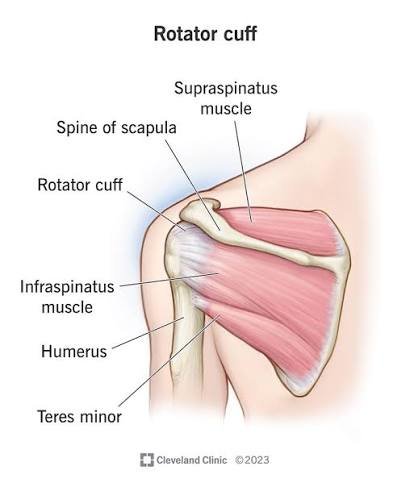
The shoulder is designed to have a very wide range of movement. That flexibility, however, also means that the tendons of the rotator cuff can become irritated, inflamed, worn down or torn.
A rotator cuff injury can range from inflammation and tendinopathy to a partial or complete tendon tear.
Rotator cuff problems are particularly common among people who perform repetitive overhead movements. They can occur in athletes and gym-goers, but they are certainly not limited to sportspeople.
What causes rotator cuff injuries?
Rotator cuff injuries generally develop in one of two ways: gradual degeneration or an acute injury.
1. Age-related degeneration
As we get older, the tendons of the rotator cuff can gradually become weaker. Repeated use over many years may contribute to tendon degeneration.
This means that some people develop a rotator cuff tear without remembering one particular accident or injury.
2. Sports and gym injuries
Activities involving repeated overhead movements can put significant stress on the shoulder.
Swimming, tennis, badminton, cricket, throwing sports and certain gym exercises can all contribute to shoulder problems if performed with poor technique, excessive loads or inadequate recovery.
3. A sudden injury
A rotator cuff tear can also occur following a sudden event such as a fall, lifting something heavy or forcefully pulling the arm.
An acute tear may be accompanied by sudden pain and weakness in the shoulder.
4. Repetitive overhead activity
People whose occupations require frequent overhead work may also be at increased risk.
This can include construction workers, painters, electricians and others who repeatedly work with their arms elevated.
What are the symptoms of a rotator cuff injury?
Not every rotator cuff problem produces exactly the same symptoms.
Common symptoms include:
- Pain in the shoulder
- Pain that radiates down the upper arm
- Pain while lifting the arm
- Difficulty reaching overhead
- Shoulder pain while sleeping
- Pain when lying on the affected side
- Weakness in the arm
- Difficulty performing everyday activities
- A clicking or catching sensation in the shoulder
- Reduced range of motion
One of the symptoms I pay particular attention to is weakness.
Pain alone does not necessarily mean that you have a rotator cuff tear. However, persistent pain combined with significant weakness or difficulty lifting the arm deserves an orthopaedic evaluation.
Why does rotator cuff pain become worse at night?
Many patients tell me that their shoulder does not bother them significantly during the day but becomes extremely painful at night.
This can happen because certain sleeping positions place pressure on the affected shoulder. Inflammation and irritation around the rotator cuff can also make lying on the affected side uncomfortable.
If shoulder pain is repeatedly disturbing your sleep, I would recommend getting it assessed rather than simply continuing to tolerate it.
How is a rotator cuff injury diagnosed?
Diagnosis begins with a detailed medical history and physical examination.
During an orthopaedic assessment, I evaluate factors such as:
- Where exactly the pain is located
- When the pain started
- Whether there was an injury
- Which movements cause pain
- Shoulder range of motion
- Muscle strength
- Signs of tendon irritation
- Whether there are other possible causes of shoulder pain
Depending on the findings, imaging may be recommended.
X-rays
X-rays do not directly show the rotator cuff tendons, but they can help identify other conditions affecting the shoulder, including bone abnormalities or arthritis.
Ultrasound
An ultrasound can be useful for assessing rotator cuff tendons and may be particularly useful in certain clinical situations.
MRI
An MRI provides detailed images of the soft tissues of the shoulder and may be recommended when a significant rotator cuff tear is suspected or when further assessment is required.
The appropriate investigation depends on the individual patient. Not every patient with shoulder pain needs an MRI immediately.
Can a rotator cuff tear heal without surgery?
This is one of the most common questions I receive.
The answer is: sometimes, patients with rotator cuff tears can achieve very good function without surgery.
Treatment depends on several factors, including:
- Your age
- Activity level
- Type and size of the tear
- Duration of symptoms
- Degree of weakness
- Functional requirements
- Whether the injury was acute or chronic
- Overall health
According to the American Academy of Orthopaedic Surgeons, many patients with rotator cuff tears can obtain pain relief and improved function through non-surgical treatment.
However, it is important to understand the difference between symptom improvement and tendon healing.
A person may have a tear that does not completely heal structurally but still regain excellent shoulder function through appropriate rehabilitation.
Non-surgical treatment for rotator cuff injuries
For many patients, treatment initially focuses on controlling pain and restoring shoulder function.
Activity modification
You may need to temporarily reduce activities that aggravate the shoulder.
This does not necessarily mean complete immobilisation.
Instead, the goal is usually to avoid movements that repeatedly provoke pain while maintaining appropriate movement of the shoulder.
Physiotherapy
Physiotherapy is one of the most important components of rotator cuff treatment.
A structured rehabilitation programme can help improve:
- Shoulder mobility
- Rotator cuff strength
- Scapular control
- Muscle coordination
- Functional movement
The exercises should be individualised. I strongly recommend avoiding random shoulder exercises found on social media when you have significant shoulder pain or a diagnosed tear.
The wrong exercise, performed at the wrong stage of an injury, can aggravate symptoms.
Medication
Depending on your medical history, your doctor may prescribe medication to help control pain and inflammation.
Do not self-medicate with painkillers for prolonged periods without medical advice, particularly if you have other medical conditions or take other medications.
Injections
In selected patients, an injection may be considered when pain continues despite appropriate initial treatment.
The decision depends on the underlying diagnosis and individual circumstances.
When is rotator cuff surgery required?
Surgery is not automatically required for every rotator cuff tear.
However, surgery may be considered in situations such as:
- A significant acute tear following an injury
- Persistent pain despite appropriate non-surgical treatment
- Significant weakness
- Loss of shoulder function
- A large tear
- High-demand athletes or individuals whose work requires substantial overhead activity
- Symptoms that continue for an extended period despite appropriate treatment
The AAOS notes that factors such as persistent symptoms, significant weakness, larger tears and acute injuries can influence the decision to consider surgery.
The decision should therefore be made after assessing the individual patient rather than based solely on an MRI report.
What is arthroscopic rotator cuff surgery?
When surgery is appropriate, arthroscopic shoulder surgery is one of the techniques that may be used.
Arthroscopy involves inserting a small camera into the shoulder through small incisions. Specialised instruments can then be used to assess and treat the damaged structures.
For a rotator cuff tear requiring repair, the torn tendon may be reattached to the bone.
The exact procedure depends on the nature of the injury and whether there are associated problems within the shoulder.
As an orthopaedic surgeon with an interest in sports injuries and arthroscopic procedures, I believe the objective of treatment should always be to restore useful shoulder function while selecting the least invasive appropriate treatment for the individual patient.
Physiotherapy after rotator cuff surgery
Surgery is only one part of the treatment journey.
Rehabilitation is extremely important after rotator cuff surgery.
The repaired tendon needs time to heal, while the surrounding muscles may have become weak or stiff because of the injury and period of restricted movement.
A structured rehabilitation programme can gradually restore:
- Range of motion
- Shoulder control
- Muscle strength
- Functional movement
- Return to work, sport and daily activities
The rehabilitation timeline varies from patient to patient. Returning to heavy lifting or sports too quickly can compromise recovery.
The AAOS also emphasises the important role of rehabilitation following rotator cuff repair, with recovery potentially taking several months and, in some cases, up to a year.
Rotator cuff injuries in Bangalore: when should you see an orthopaedic surgeon?
Bangalore’s increasingly active lifestyle means I see patients with shoulder problems from many different backgrounds — professionals, gym-goers, recreational athletes and older adults.
You should consider an orthopaedic evaluation if:
- Your shoulder pain persists for several weeks
- You have difficulty raising your arm
- You experience significant weakness
- Pain repeatedly wakes you at night
- Your shoulder pain started after a fall or sudden injury
- You cannot perform normal daily activities
- Your symptoms are getting progressively worse
- You have already tried rest but the pain keeps returning
If you live around Vijayanagar, Basaveshwaranagar, Rajajinagar, Chandra Layout, Nagarbhavi, Attiguppe, Kamakshipalya, Hosahalli, Kengeri or other parts of West Bangalore, persistent shoulder pain should not simply be dismissed as “normal wear and tear.”
Early assessment can help identify the underlying problem and establish an appropriate treatment plan.
Do not ignore shoulder pain this Raksha Bandhan
Raksha Bandhan is traditionally about protecting and caring for the people closest to us.
This Rakhi, while you celebrate with your brother, sister and family, take a moment to think about your own health as well.
If you have been ignoring shoulder pain because you are busy with work, gym, sports or family responsibilities, this may be the right time to get it evaluated.
A painful shoulder is not always “just a strain,” and a rotator cuff tear does not always mean surgery.
The right treatment depends on the individual diagnosis.
Whether you need activity modification, physiotherapy, medication, injections or surgical treatment, the first step is understanding what is actually causing your shoulder pain.
Consult an Orthopaedic Surgeon for Persistent Shoulder Pain in Bangalore
I am Dr. Anil Patil, Orthopaedic Surgeon in Vijayanagar, Bangalore, with an interest in sports injuries, arthroscopic procedures, joint replacement and fracture management.
My practice includes evaluation and management of orthopaedic and sports-related problems, including shoulder conditions.
If you are experiencing persistent shoulder pain, weakness, restricted movement or difficulty performing everyday activities, an orthopaedic assessment can help determine whether the problem is related to the rotator cuff or another condition affecting the shoulder.
This Raksha Bandhan, protect the people you love — and remember to protect your own health too.
This article is intended for general educational purposes and should not be considered a substitute for an individual medical consultation. Treatment decisions should be made after clinical assessment by a qualified medical professional.
Frequently Asked Questions About Rotator Cuff Injuries
Can a rotator cuff tear heal on its own?
Not every rotator cuff tear heals completely on its own. However, many patients can achieve significant improvement in pain and shoulder function with appropriate non-surgical treatment and rehabilitation.
Does every rotator cuff tear require surgery?
No. Surgery is not necessary for every tear. The decision depends on factors including the size and type of tear, symptoms, weakness, activity level, age and response to non-surgical treatment.
Is physiotherapy useful for rotator cuff injuries?
Yes. Physiotherapy is an important part of both non-surgical and post-surgical treatment. A structured programme can improve mobility, strength and shoulder function.
Is shoulder pain at night a sign of a rotator cuff problem?
Night pain can occur with rotator cuff problems, particularly when lying on the affected shoulder. However, several other shoulder conditions can also cause night pain, so proper evaluation is important.
Should I get an MRI for shoulder pain?
Not necessarily. The need for MRI depends on your clinical examination and suspected diagnosis. Your orthopaedic surgeon can recommend the most appropriate investigation.
When should I see an orthopaedic surgeon in Bangalore for shoulder pain?
If shoulder pain persists, is associated with weakness or restricted movement, follows an injury, repeatedly affects your sleep, or interferes with daily activities, an orthopaedic evaluation is advisable.
Dr. Anil Patil
Orthopaedic Surgeon | Vijayanagar, Bangalore
Sports Injuries | Arthroscopic Surgery | Joint Replacement | Fracture Management